How I'm leveling up my writing

The Floor-Scrapers (1875) by Gustave Caillebotte
In the past 4 months, I have, without fail, invested 10-15 hours/per week into improving my research game.
This venture actually started with me creating content that stands the test of time.
I'm saying this with a lot of shame that most of the content I wrote in the last 3 years, close to 95% I guess, is useless to me or my audience.
Although the beginner version of me found them incredibly insightful, now it looks cringe and forced.
They're the equivalent of warm‑up sketches—good practice for me, but no one hangs them in a gallery.
People come for the finished painting, not the doodles.
The main culprit is that I created a lot of "off-the-cuff content."
I generated ideas on the spot. I wrote the first drafts without any thoughts. I rarely did any research to back my claims (or even knew what my claims were).
My writing screamed anecdotal, which loosely translates as "believe what I said because it happened to me.
Now, it might sound like I'm making the speed of content creation the villain, but it's actually just a lack of research and thought-out arguments.
No wonder the content fizzled after a week—it never went through a fine‑tooth comb of checks.
Heck, I had no standard, to be honest.
So, I went back to the whiteboard to solve this problem.
And after asking 5 writers ahead of me in the game (people with 100k+ newsletters or with $50k+ MRR), the most common response I got was to carefully pick what I read and take better notes.
I had the hint this was the answer.
For this, I read 2 really helpful books to counter each problem.
A new framework to take notes.
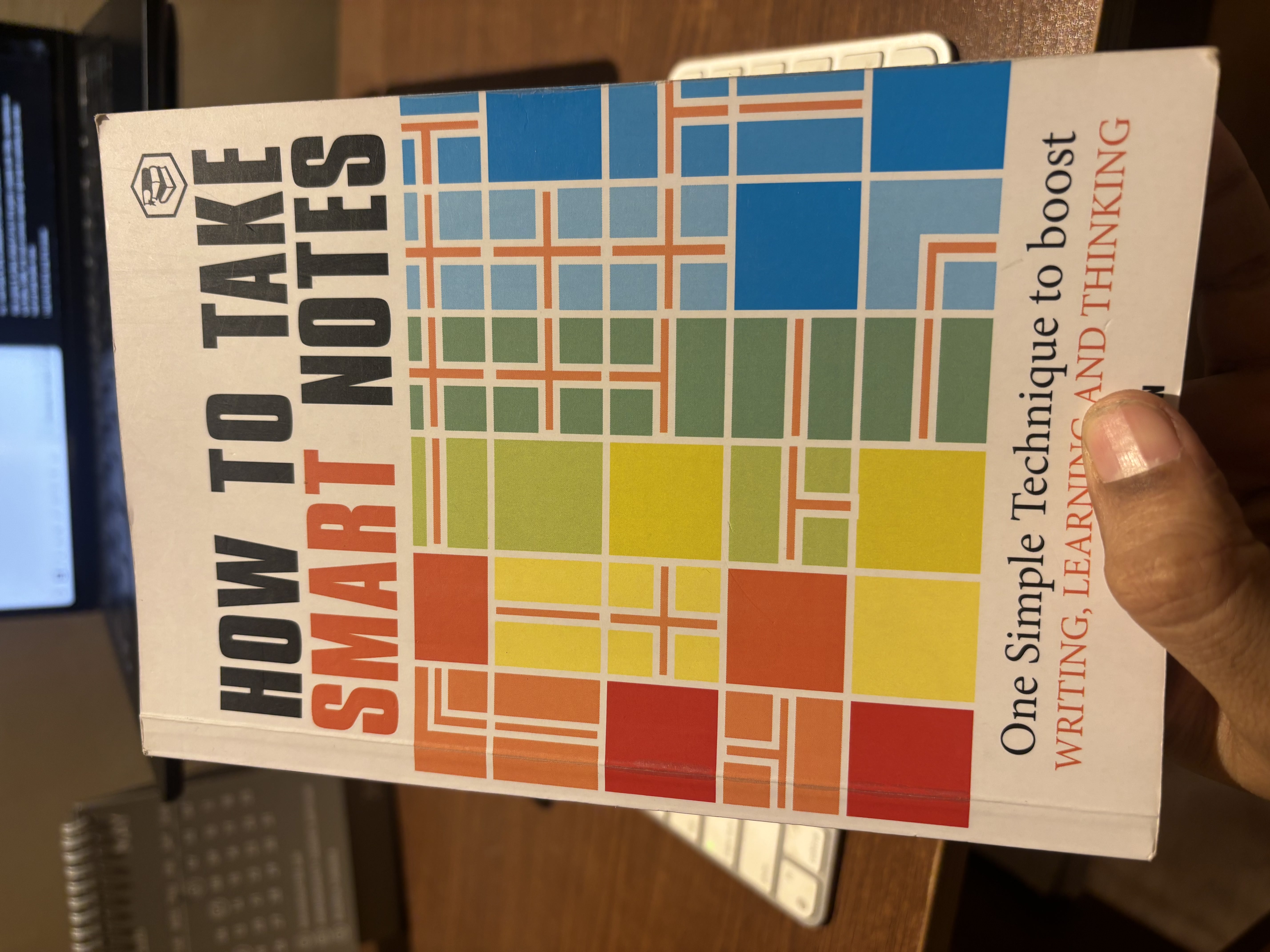
Before starting, I always considered myself to be a decent note-taker.
Like I always read with a pencil in hand, summarized my learnings from each book and increased my mental latticework. I even tweeted about this.
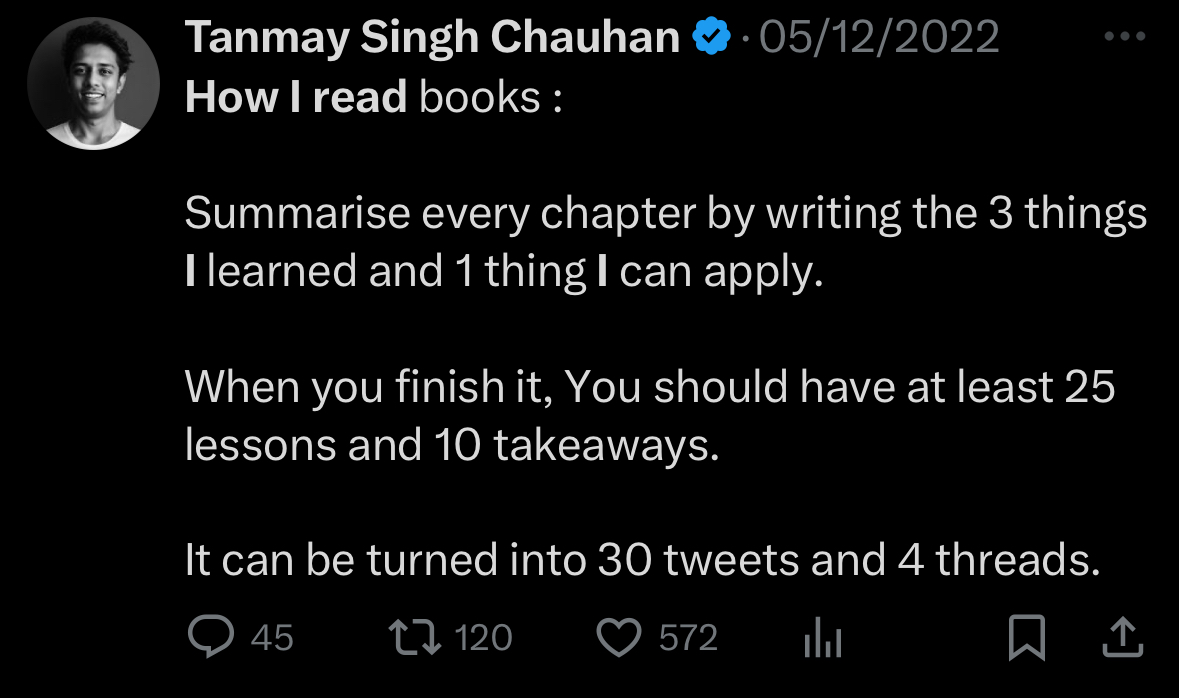
But I never had a decent categorization system. I simply titled them under the book or the topic.
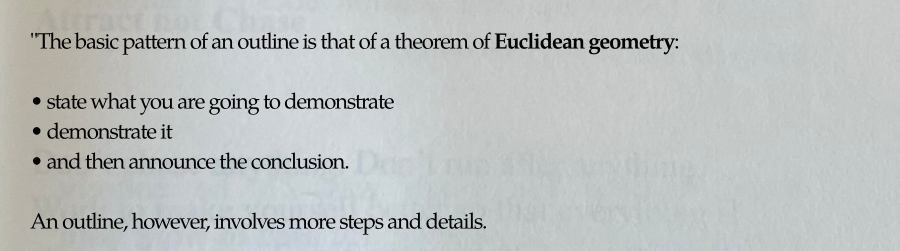
After reading this book some more, I understood I should always be looking for 3 types of things to take note of:
• The big idea
• The reason
• The evidence
This is derived from the world of mathematics called Euclidean geometry, which I discovered in Ayn Rand's The Art of Non-fiction.
Here's a really good visual representation that I found in a blog. ( It also explains this Zettelkasten note-taking system better than I did here)
This is how your ideas compound.
Each new note should become an extension of your existing notes.
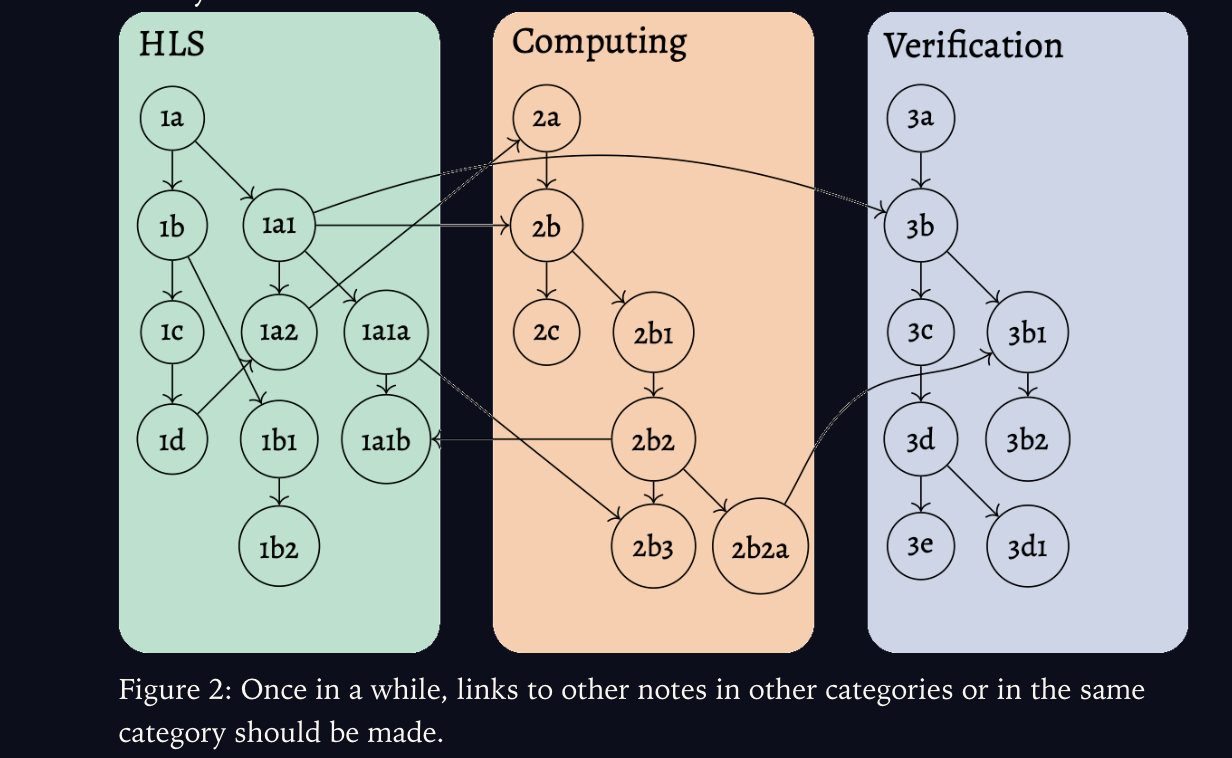
Some writers on Reddit even said they measure their productivity on how many notes they've added at the end of the day.
I found this amusing.
A new way to look at research.
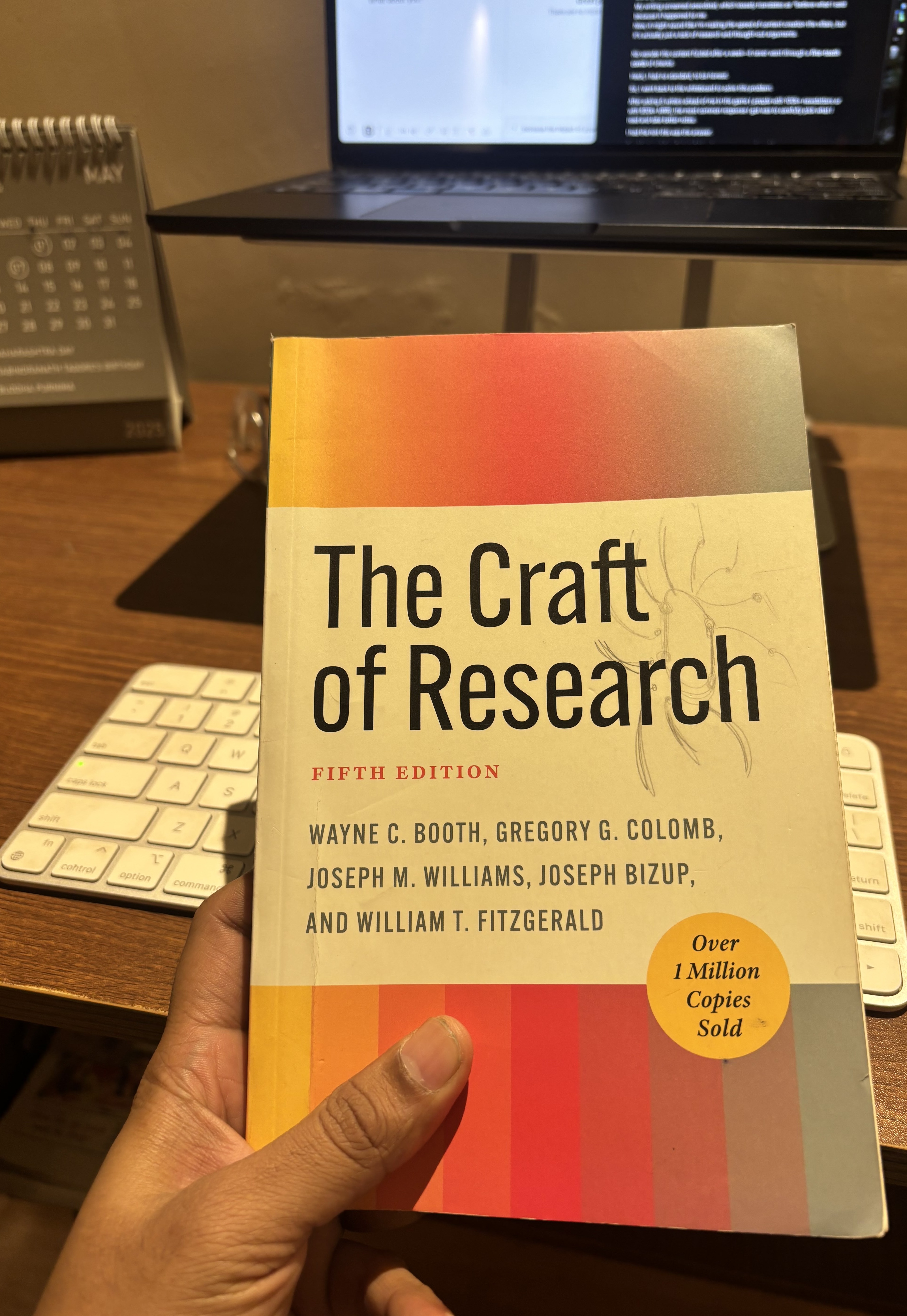
To build on top of my knowledge, I wanted to dig into the trenches of how some of the world's best researchers did it.
And I found they do have a good process.
It's basically:
1. Claim — What you want your audience to believe.
• Example: "Remote work will become the default mode of working in 10 years."
2. Reason — Why you believe it's true.
• Example: "Because companies are saving massive costs on real estate and operations."
3. Evidence — The hard proof that backs you up.
• Example: "A 2023 Gartner survey found 78% of CEOs plan to maintain or expand remote work policies."
4. Warrant — How your reason and evidence connect back to your claim.
• Example: "Just like e-commerce exploded once companies saw the cost benefits over physical retail, remote work will follow the same path."
5 Conclusion — How you wrap it all up.
• Example: "Given the savings and CEO preferences, remote work becoming the norm isn't just likely—it's inevitable."
If you want to strengthen it, you can also address objections and acknowledgments.
But I would leave them if we're doing it on socials.
What changes I made
Nothing here I wrote is groundbreaking. I knew bits and pieces but didn't have that rock-solid framework for the whole.
The only difference is now I've broken them down into steps and systems that I can use daily. For instance, I have already started taking advantage of my old notes. That Euclidean geometry from Ayn Rand's because is a good example.
I saw that it was good evidence to back my claim, and I used it.
Final thoughts
I've already started to embrace this researcher side of me.
As AI writing progresses rapidly, your research quality will help you stand out from the crowd. Because anyone who is decent at prompting can write 7/10 quality. But if you want to write 9/10 or 10/10 writing quality, you must do better research
Some of you may know I've joined Internet Empires by Ish Verduzco as a part-time researcher. A role that I got partly because of my research skills.
So yeah, I'm going mostly all in as a researcher positioned as a ghostwriter.
What about you?

That's it for the day.
This is part of an email that I sent to my list.
If you wish to read my emails regularly, join my newsletter below.
Thank you for your attention.
That's it for the day.
This is part of an email that I sent to my list.
If you wish to read my emails regularly, join my newsletter below.
Thank you for your attention.