How to become more curious
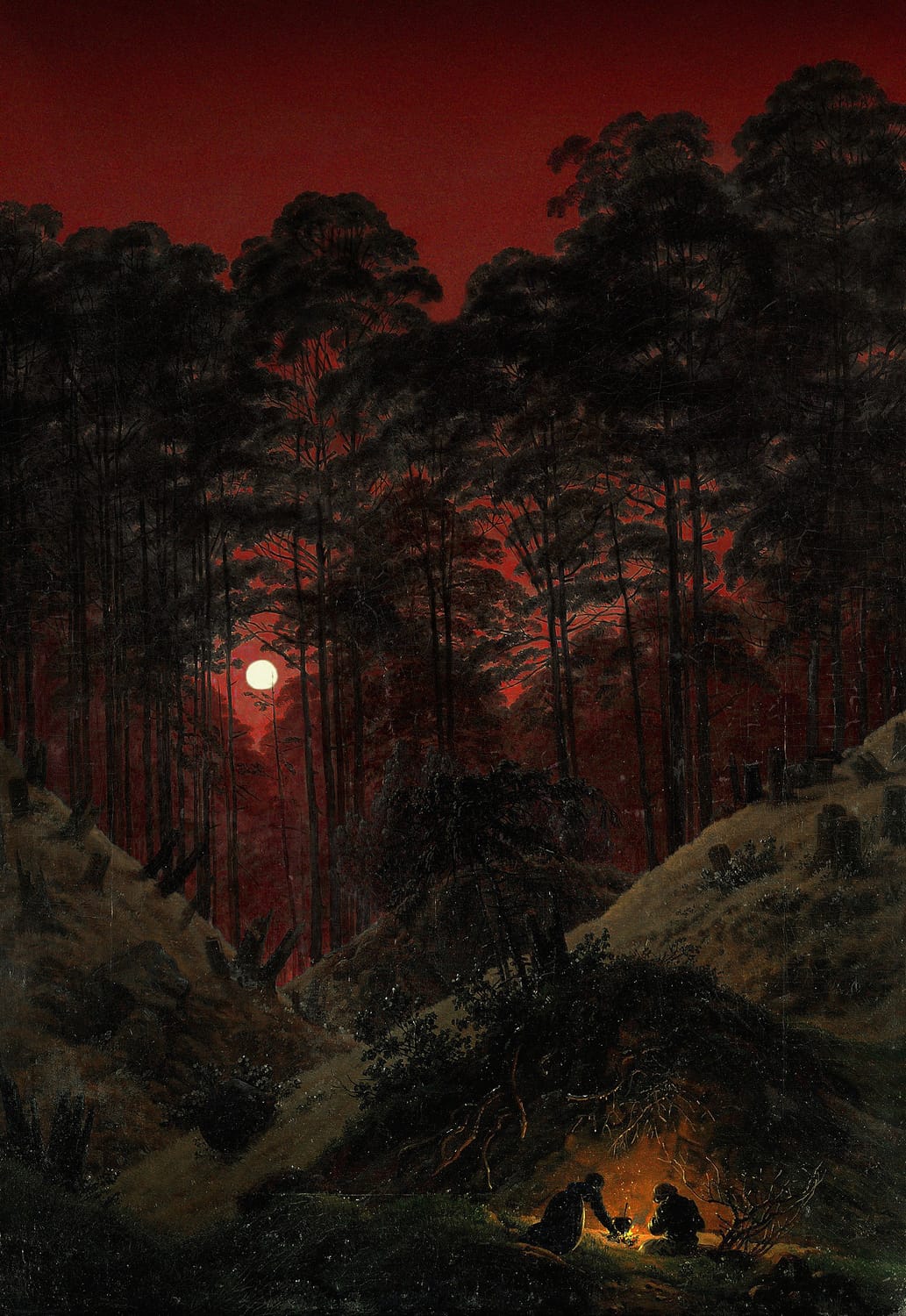
Forest interior by moonlight by Caspar Friedrich circa 1774
In the 90s, Pixar was producing banger after banger like Toy Story, Monster Inc., Toy Story 2, whereas their arch-rival Disney was struggling with a streak of terrible releases.
Jobs explaining what might be causing this:
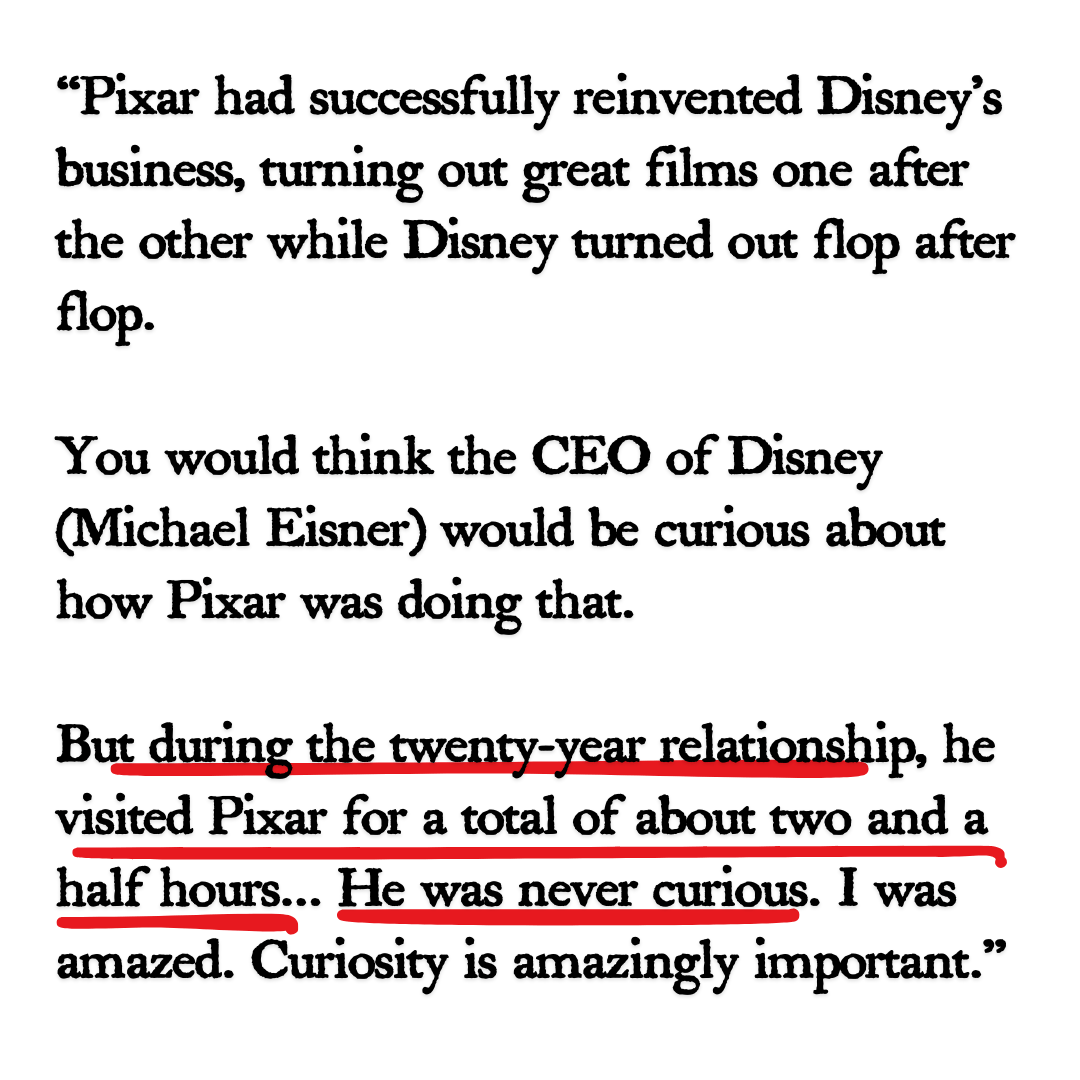
He blames Michael Eisner’s lack of curiosity.
What’s surprising is that we’re born with a sizzling desire to ask questions.
A child between 2 to 5 asks somewhere around 40,000 questions during that period.
I think we can agree that all of us do lose some of it along the way, but those who keep it alive are often awarded by the universe.
After all, curiosity is the fuel of innovation.
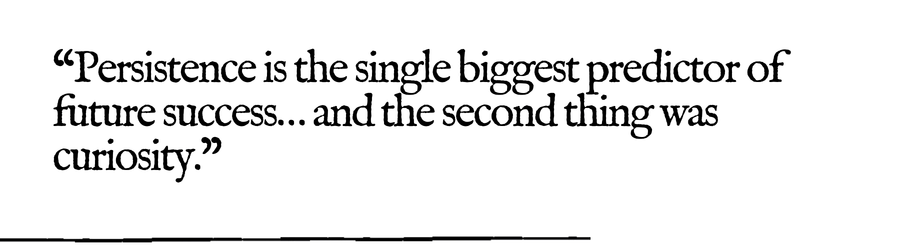
Even elite companies look for this trait when they’re hiring. Eric Schmidt, former Google CEO, once said:
So, I wanted to understand the science behind curiosity and I did some research.
And I found there are widely accepted two types of curiosity:
1. Diversive curiosity
2. Epistemic curiosity
Heads up... one is way better than the other.
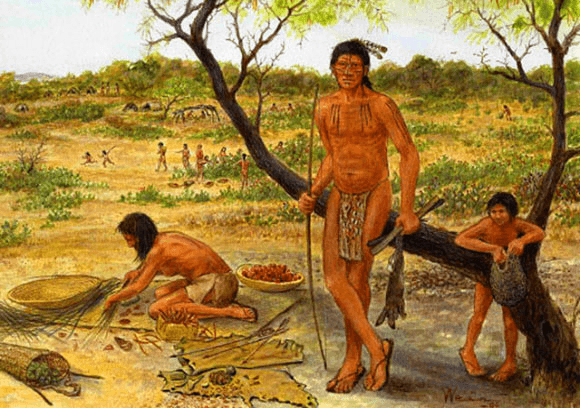
Diversive curiosity is the one that makes you scroll your phone, makes you turn down your TV volume to hear your neighbours fight, and probably what drove early homosapiens to leave the African savannah and spread across the rest of the earth.
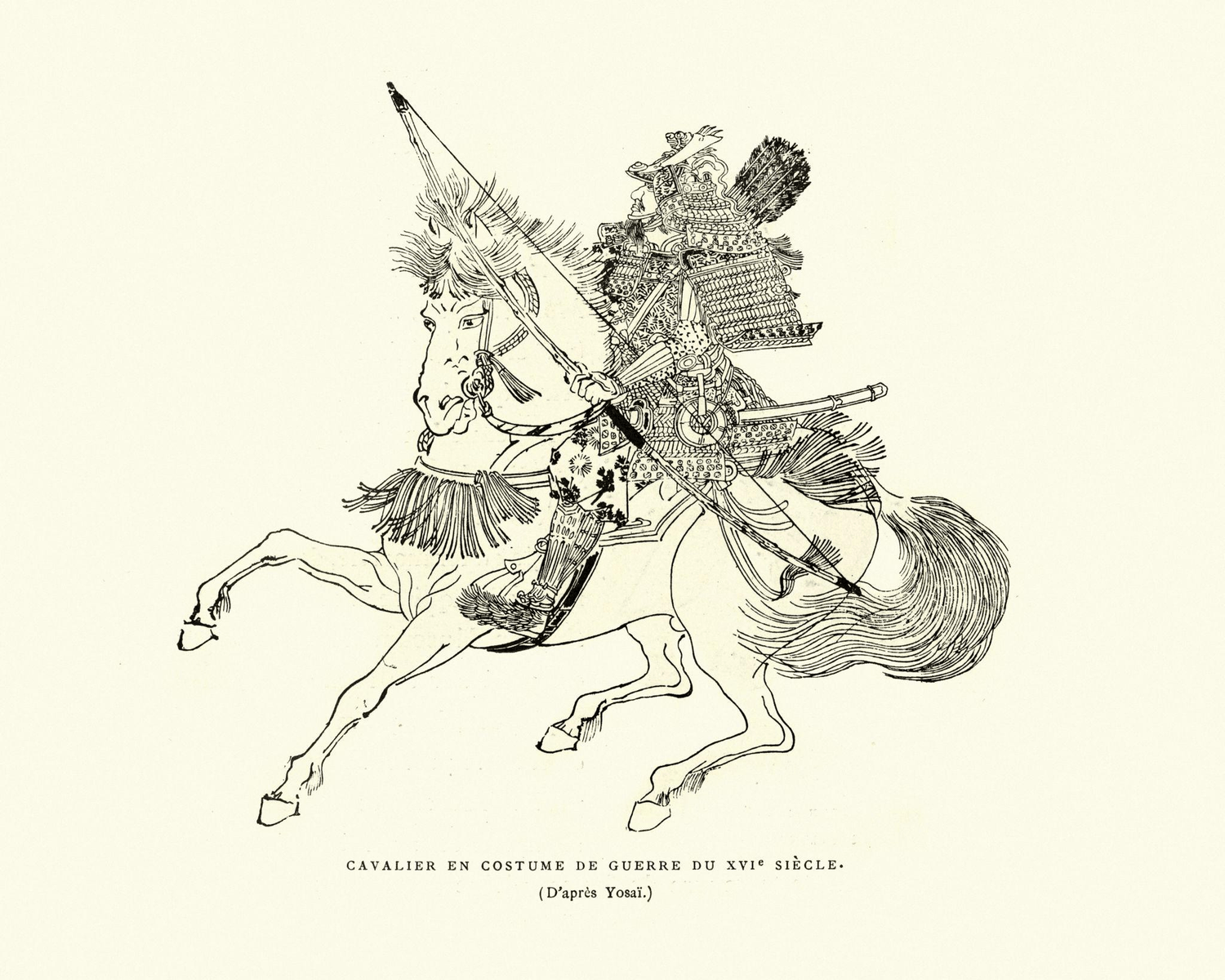
It’s surface-level curiosity that is good for killing boredom but not for doing great things.
On the other hand, epistemic curiosity is what makes you dive into a bolthole.
This is what great artists, athletes, and founders often possess to achieve their mission. This one helps you seek knowledge, acquire explanations, and reach places no other person could ever reach because they simply don’t have curiosity.
A 2013 study by Robert Wilson at Rush University Medical Center followed elder people who were still writing and reading.
And they compared these people with those who had left their learning days long behind in college.
People who stayed intellectually active showed one-third slower mental decline, even when their brains had the same physical signs of dementia.
Just like muscles deteriorate when unused, neural pathways weaken when they are not stimulated. Reading, writing, and learning create new synaptic connections, which gives the brain alternative routes when aging or disease damages existing ones.
Curiosity literally de-ages you.
Okay, so far I’ve established that curiosity is a trait of gods, but how do we practice this in daily life?
I’ve found 3 ways:
1.Discard the existing explanation
Whenever you’re reading or learning about something new, question the big why.
Always ask why is this the way it is? Who decided that? What was their philosophy behind it? Did it work? Was it efficient?
Can I do something better here?
2.Raw materials combined with daydreaming
Daydreaming had a big impact on tech and science.
Newton was famously sitting under a tree when he got the idea of gravity, but does that mean anyone who sits under that tree would have the same idea?
Of course no, because they didn’t have the big database that Newton had in his head. He was already working on that problem for decades. He spent years studying motion, Kepler’s laws, and mathematics.
So curiosity will only work if you have all the pieces of the puzzle floating inside your head, and that comes from attaining a wide variety of knowledge in your field.
Always keep gathering raw material.
3.Wide funnel but a strong filter
Someone asked Morgan Housel how he researches, he said:
“When finding a new book to read, my strategy is to have a wide funnel and a strong filter. I want to start reading as many books as possible, but finish few of them.”
This advice is the classic debate whether it’s better to become a generalist or a specialist, but people with great curiosity are a mix of two.
Scott Adams, the creator of the comic strip Dilbert, once explained 'skill-stacking':
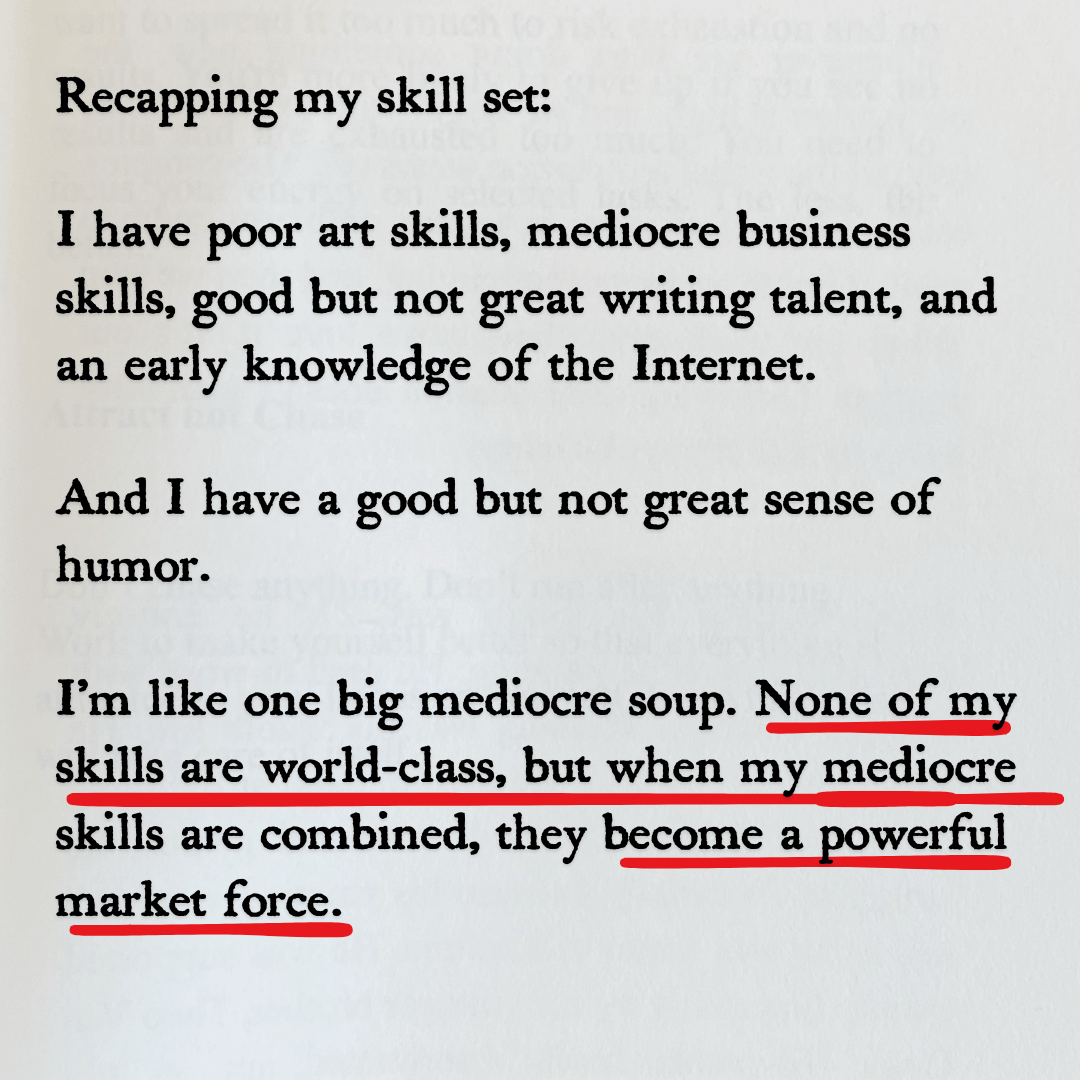
Kinda like a great founder who is skilled at multiple things like sales, management, product, marketing. They’re a loose bag of all skills solving one very specific problem in the market.
Now, I don’t claim this to be easy, it’s not. I’ve tried and it sucks most of the time to read through a 300 page book and end up with nothing.
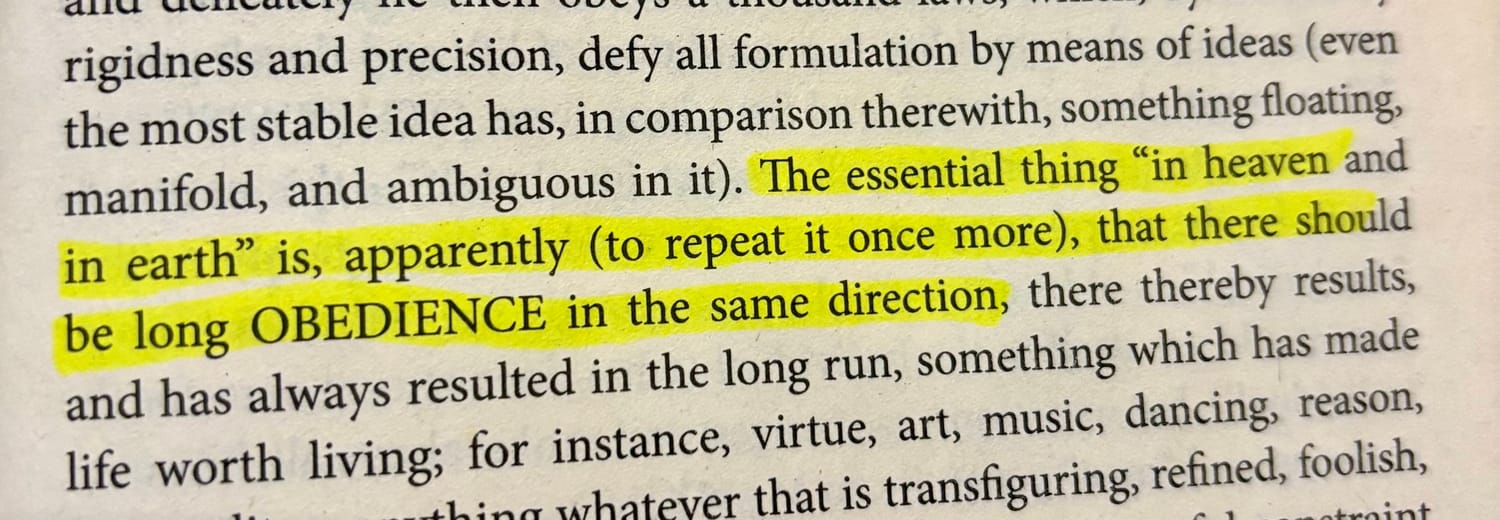
So I’ll leave you with a quote by Nietzsche:
That's it for the day.
This is part of an email that I sent to my list.
If you wish to read my emails regularly, join my newsletter below.
Thank you for your attention.
That's it for the day.
This is part of an email that I sent to my list.
If you wish to read my emails regularly, join my newsletter below.
Thank you for your attention.